From Energy Policy to Practice: A Conversation with Xandy Walsh
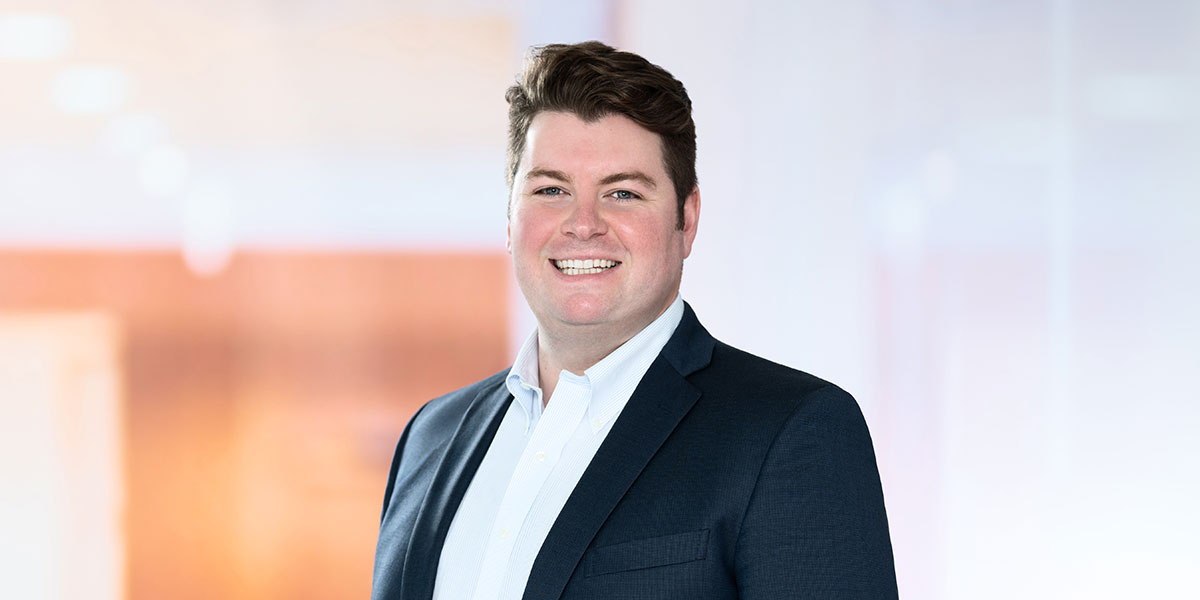
Xandy Walsh is an Associate at Mintz whose practice focuses on corporate and transactional matters, specifically on private equity and venture capital transactions, energy and infrastructure projects, and general corporate matters. He works with companies in a range of industries and leverages his prior experience as an energy regulator working with clients in the energy industry.
Before entering private practice, Xandy Walsh built a foundation in energy policy, an experience that continues to shape how he approaches complex transactions and advises clients across the energy and infrastructure sector. Today, as a member of Mintz’s Sustainable Energy & Infrastructure Practice, he works with investors, lenders, government agencies, and innovators navigating financing, growth, and an evolving energy landscape. We spoke with Xandy Walsh about his path from policy to legal practice, the trends shaping the energy industry, and what he finds most rewarding about helping clients move ambitious projects forward.
What attracted you to building a practice in the energy and infrastructure sector?
I came to legal practice following an early career in energy policy. I was driven then, as I am now, by the big structural questions: how do we achieve energy security priorities, how will new technologies get financed and deployed, and how do we accomplish all of the above in a future-focused, environmentally conscious way? Over time, I was drawn to work alongside the companies and investors who answer those questions in practice — each playing a role in the broader energy ecosystem. Mintz’s Sustainable Energy & Infrastructure Practice offers an unusual combination of sophisticated deal work and end-to-end representation involving significant capital and lasting real-world impact, which makes the practice both intellectually demanding and deeply rewarding.
How has your prior career in energy policy influenced the way you advise clients today?
I’ve been fortunate to see the energy industry from several angles, first working on electric vehicle policy in Washington, DC, and then serving as a natural gas regulatory economist for the Commonwealth of Massachusetts. These roles brought into focus the inherent tension policymakers face between prioritizing the deployment of innovative technologies and maintaining and modernizing existing energy systems and infrastructure. This lens continues to inform how I advise investors, lenders, government agencies, and innovators alike in navigating transactional risks in a pragmatic, forward-looking way.
What do you find most rewarding about helping clients navigate growth and strategic opportunities?
The most rewarding engagements tend to come at inflection points for our clients, such as a first institutional financing, a transformative acquisition, or the capitalization of a project that moves it from concept to construction. My role is to bring clarity to complexity, anticipate issues before they become obstacles, and keep transactions moving with discipline and momentum. Achieving a well-structured, pragmatic solution that a client can execute with confidence and then seeing the client charge forward toward the next milestone is the best part of the job.
What trends or developments in energy and infrastructure are you most excited about right now?
I’m excited that nuclear has returned to the energy conversation as part of the “all hands on deck” push for new baseload generation driven by demand from data centers, reshoring, and electrification. Few energy assets are as reliable as nuclear plants, which routinely operate at capacity factors above 90%; yet, for years, nuclear sat at the edges of most clean energy discussions. Now we are seeing shuttered plants coming back online, and federal financing tools are backing restarts, small modular reactor (SMR) deployment, and supply-chain expansion. Taking a multi-decade view beyond the near term, new projects will need substantial capital long before they generate revenue, and they carry real exposure to regulatory delays, supply-chain constraints, and cost overruns. Still, there is renewed appetite to tackle these challenges, and early-stage companies innovating across the supply chain have an opportunity to raise capital in the near term.
What are you looking forward to as you continue to grow your practice and career at Mintz?
I’m excited to keep learning alongside clients who are shaping the energy economy. Many of them are working on problems without a settled playbook: technologies that haven’t yet been financed at scale and business models that don’t always fit neatly into the existing ecosystem. Such projects often require bespoke or “first of a kind” financing arrangements and capital structures. Each new problem teaches a nuanced lesson that informs our strategic advice.
What is your favorite way to spend your time outside of your legal work?
When I’m not at my desk, my wife and I enjoy spending time in Vermont with our dog, Rory.
Author