
Washington Update: Sustainable Energy & Infrastructure — July 2026
Federal energy and infrastructure policy remains dynamic, with policymakers focused on three interrelated challenges: strengthening domestic supply chains, expanding reliable power generation (particularly nuclear), and upgrading the electric grid to meet rising demand. Recent federal actions — including major nuclear financing, new grid oversight measures, and permitting reforms — signal an effort to accelerate project development while managing costs and regulatory complexity. At the same time, debates continue over environmental review requirements and who should bear the cost of growing electricity demand, especially from data centers. Together, these developments point to a continued push to balance speed, cost, and reliability as the US energy system evolves.
DOE Commits $17.5 Billion to Rebuild America’s Nuclear Supply Chain
The Department of Energy’s Office of Energy Dominance Financing (EDF) issued a conditional loan commitment of $17.5 billion to finance the procurement of long-lead-time components for commercial nuclear reactors, marking the largest federal investment in the nuclear power sector in decades. The financing will support five projects sponsored by utilities and energy companies nationwide, each centered on two Westinghouse AP1000 units — the only currently licensed large-scale advanced commercial reactors in the United States — for a total of 10 reactors. By supplying the upfront capital, the federal government is seeking to shorten the typical nuclear construction timeline by up to three years.
The loan structure enables bulk purchasing of the most complex and time-intensive reactor components, intended to reduce per-unit costs and compress construction timelines. Each project will be jointly owned by Westinghouse and a utility or energy company partner, with both parties required to commit $500 million each in equity upfront before accessing federal funds. Westinghouse has signed letters of intent with seven potential partners across identified project sites. Combined, the 10 reactors would generate approximately 11 GW.
The announcement reflects the Trump administration’s May 2025 executive order calling for 10 new large reactors to be under construction by 2030, while also aligning with the 18% funding increase for the Office of Nuclear Energy included in the House’s FY2027 Energy and Water Development bill. The conditional commitment is not yet final; DOE and project sponsors must first satisfy technical, legal, environmental, and financial conditions before financing documents are executed.
Army Leases Base Land for Critical Minerals Processing Facilities
The US Army announced this month that it will lease “underutilized” land at four military installations to private companies to establish domestic critical minerals processing facilities. The four companies — Titan Mining Corporation, EnergyX, Ioneer, and REalloys — will produce refined graphite, lithium, boron, and heavy rare earths, respectively, at sites spanning the Anniston Army Depot in Alabama, Pine Bluff Arsenal in Arkansas, Red River Army Depot in Texas, and Tooele Army Depot in Utah. Facility development is expected to begin next year, with initial operations targeted by 2028.
The initiative is structured under the Army’s enhanced use lease program, which permits qualifying private companies to lease base land in exchange for rent, typically in the form of infrastructure improvements. Companies will be responsible for fully funding construction and navigating a complete federal permitting process under the National Environmental Policy Act, Clean Air Act, and Clean Water Act. The initiative represents the first use of military land specifically for critical minerals processing.
Financing and market support, rather than land availability, have been the predominant gating issues for processing facilities. It’s unclear if any of the companies named will follow through with plant construction. However, the announcement is consistent with a broader administration effort to reduce import reliance for materials central to both defense and commercial technology applications. The overt support therefore has the potential to have real commercial benefit.
FERC Issues Show-Cause Orders to All Regional Grid Operators
This month, the Federal Energy Regulatory Commission (FERC) issued tailored show-cause orders to all six regional transmission organizations and independent system operators under its jurisdiction — PJM, MISO, SPP, CAISO, ISO-NE, and NYISO — directing each to either justify or reform the tariff rules governing how large energy users connect to the electric grid. The orders represent one of the more aggressive FERC actions in recent memory on grid modernization, requiring each grid operator and its transmission owners to respond within 60 days. Within 30 days, each operator must also submit an informational report detailing how it intends to ensure adequate generation will be available to serve existing and anticipated large loads.
The orders are structured around five categories of reform:
- developing efficient transmission service application and study processes;
- preventing cost shifting and requiring transparency into transmission costs;
- accommodating co-location agreements and behind-the-meter generation;
- providing new transmission services for flexible large loads; and
- developing processes to study generating facilities serving electrically proximate and co-located loads.
Rather than applying a uniform national standard, FERC tailored each order to the individual characteristics, market design, and geographic context of the relevant grid operator.
The action follows a series of FERC steps over the past year to address surging electricity demand from large industrial and technology users, including a December 2025 order directing PJM to adopt transparent tariff rules for co-located loads and the Commission’s prior approval of SPP’s High Impact Large Load initiative.
FERC Curtails Cumulative Environmental Reviews
At its monthly meeting, FERC announced it will no longer conduct cumulative environmental effects analyses as a standard component of project reviews under the National Environmental Policy Act. FERC Chair Laura Swett cited the Supreme Court’s 2025 decision in Seven County Infrastructure Coalition v. Eagle County, in which an 8-0 Court held that agency environmental reviews should be more narrowly tailored to the project under consideration rather than extending to the effects of separate, more distant projects.
FERC indicated it will continue to consider surrounding environmental conditions where they provide useful context for assessing a specific project’s impacts, but will no longer conduct freestanding cumulative effects analyses as a default component of its review process. Chair Swett framed the shift as an efficiency measure.
The announcement has drawn criticism from environmental advocates, who argue that narrowing cumulative review could obscure the compounding effects of multiple facilities in already-burdened communities. Commissioner Judy Chang, in a concurrence, emphasized that FERC retains an obligation to assess each project within the context of real-world conditions. Legal scholars and policy analysts have also noted that obligations outside of NEPA — including provisions of the Natural Gas Act— may independently require broader contextual analysis regardless of the Court’s NEPA ruling.
The Ratepayer Protection Act Advances Amid Mixed Reception
Also this month, Reps. Gabe Evans (R-CO) and Kathy Castor (D-FL) introduced bipartisan legislation aimed at shielding utility customers from the infrastructure costs associated with large-load electricity consumers, principally data centers. The Ratepayer Protection Act would amend the Public Utility Regulatory Policies Act of 1978 to establish a federal standard requiring electric utilities to recover the full, incremental costs of generation, transmission, or distribution upgrades for large-load customers, with financial assurances provided upfront. State regulators would retain authority to reject the standard, and states with comparable policies already in place could qualify for exemptions. Within a week of its introduction, the Ratepayer Protection Act has advanced through the House Energy and Commerce Subcommittee on Energy to the full committee.
The bill has attracted notable industry support from Microsoft and the Data Center Coalition, whose membership includes Google, Meta, and other major technology firms. Other major developers, including Oracle and xAI, have not publicly commented.
The bill’s prospects remain uncertain, with lawmakers divided over both the scope and urgency of federal action. Some Democrats and environmental groups argue the measure is not comprehensive enough, saying it leaves gaps around consumer protection, environmental impacts, land use, and noise. Others are pushing more prescriptive approaches, including separate legislation on data center cost allocation and, in some cases, a temporary moratorium on data center development. Among those calling for a moratorium is Ranking Member Frank Pallone (D-NJ), who argued that the Ratepayer Protection Act and other bills before the subcommittee fall short of the stronger federal response needed to address data center impacts. At the same time, some Senate Republicans have indicated that data centers are not currently a legislative priority.
Bipartisan FREEDOM Act Aims to Streamline Energy Permitting
Senators Tom Cotton (R-AR) and Catherine Cortez Masto (D-NV) introduced the Fighting for Reliable Energy and Ending Doubt for Open Markets (FREEDOM) Act this month, offering a technology-neutral framework to reduce permitting uncertainty and limit unnecessary delays for energy projects. The bill would amend the Energy Act of 2020 to establish enforceable federal authorization timelines, create expedited judicial remedies when agencies miss deadlines, and restrict federal actions that halt projects that are already substantially permitted.
Among other protections, the bill bars federal agencies from issuing stop-work orders, revoking permits, or otherwise halting construction on fully permitted projects except under a narrow set of defined extreme circumstances. The bill also prevents agencies from using voluntary remand to back away from previously issued approvals for fully permitted projects unless the project sponsor consents.
To address chronic deadline failures, the bill establishes a $50 million permitting performance fund that project developers could access with court authorization. The funding would allow contractors to complete overdue agency analyses at no cost to the project itself. The bill also includes targeted measures to streamline mining and geothermal development, including a reversal of a 2019 court decision that restricted tailings disposal options for mining operations.
A companion House bill was introduced in February with similar bipartisan support.
Looking Ahead
ML Strategies continues to monitor these developments closely, along with broader legislative and regulatory activity shaping the energy and infrastructure landscape. We welcome the opportunity to discuss how these evolving policies may impact your organization and to explore potential engagement strategies.

Authors
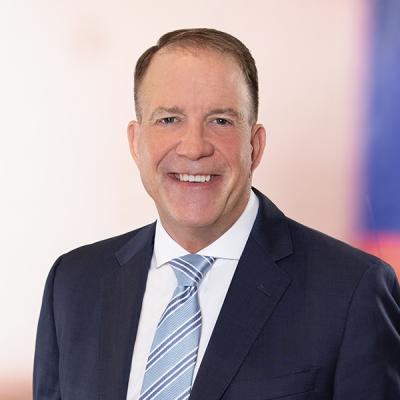
John Lushetsky
Senior Vice President of ML Strategies

R. Neal Martin
ML Strategies - Senior Director of Government Relations