Mintz On Air: Practical Policies — The Only Easy Workday Was Yesterday: The Impact of Special Ops Veterans in the Workplace
In the latest episode of the Mintz On Air: Practical Policies podcast, Jen Rubin is joined by fellow Member Dave Lagasse for an unscripted conversation about the transition of special operations forces veterans into the private-sector workplace, and the valuable skills and perspectives they can bring to employers. This episode is part of a series of conversations designed to help employers navigate workplace changes and understand general legal considerations.
Together, Jen and Dave explore:
- The meaning of the Navy SEAL motto “The only easy day was yesterday” and its relevance to working in complex, high-pressure business environments
- Five truths about special operations forces and how they relate to the private sector, including the critical role of support functions, and how trust and collaboration drive mission and business success
- The need for proactive training and preparation before a crisis, rather than reactive decision-making
Listen for insights on how the unique leadership mindsets and team-oriented approach developed through special ops experience can be a huge asset to employers in the private sector.
Practical Policies — The Only Easy Workday Was Yesterday: The Impact of Special Ops Veterans in the Workplace Transcript
Jen Rubin (JR): Welcome to the Mintz On Air: Practical Policies podcast. Today’s topic: The Only Easy Workday Was Yesterday: The Impact of Special Ops Veterans in the Workplace. I’m Jen Rubin, a Member of the Mintz Employment Group with the San Diego–based Bicoastal Employment Practice, representing management executives and corporate boards. Thanks for joining Mintz On Air. If you have not tuned in to our previous podcasts and would like to access our content, visit us at the Insights Center at Mintz.com, or you can find us on Spotify.
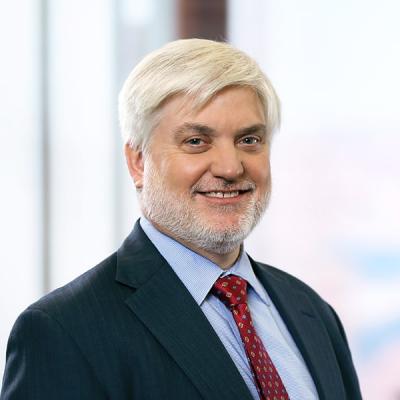
Today I’m pleased to host my fellow Employment Practice Member Dave Lagasse, who has joined me on a very interesting journey over the past several years: supporting veterans, specifically special operators, as they transition from the military to the private sector.
A little over 10 years ago, I was fortunate to have the opportunity to lend some support and expertise as an employment lawyer to a really impactful organization known as the Honor Foundation. The Honor Foundation is a nonprofit that supports special operator veterans as they transition from military service to the private sector.
Very briefly, when I use the term “special operators,” I’m referring to the elite special forces segments of the US Armed Forces. Most people know about Navy SEALs, but there are other elite forces such as Army Rangers, which also includes Green Berets; Marine Raiders; Air Force special operators known as Space Force; and even the Coast Guard has deployable special forces. All of these individuals and the forces that support them — operations, intelligence, logistics — are highly trained for their missions. That is some tremendous intellectual and leadership firepower that can be put to incredible use in the private sector once they’ve completed their military service.
So I co-opted Dave Lagasse, my partner, a few years ago to help me as a faculty member and advisor for these programs that are now operated from all over the United States and virtually from international locations. Dave and I both teach private-sector compensation practice to these service members through the Honor Foundation, to provide them with tools to better understand and negotiate their true value in the private sector.
The focus of my conversation with Dave today is about some of the special skills these individuals bring to the private sector, and how employers might best utilize those skills.
Thank you, Dave, for bearing with me for that long lead-in, and thank you for joining us.
Dave Lagasse (DL): It is always my pleasure, Jen.
JR: Before we dive into our topic, can you tell us a little bit about your law practice? What is it that you do?
DL: I am an executive compensation and employment lawyer, and I spend almost all my time negotiating on behalf of both companies and individuals in how they get paid and how they operate in the business world. What sort of decision rights do they have? What abilities do they have to drive the business forward? I spend time advising employers how to manage their workforces.
JR: Very on-point for our discussion today, as well as for the work you have done for the Honor Foundation. I am very grateful to have you aboard for that.
“The only easy day was yesterday.”
JR: I’d like to start with the title of this episode. Some of you may be familiar with the phrase “The only easy day was yesterday.” Dave, tell us about the meaning of that phrase and how it is potentially relevant to being employed in the private sector.
DL: That’s the SEAL motto, actually. What it really means is that, as a SEAL, the expectation is that every day is going to get harder than the day before. Whether it’s a training set or a mission, as time goes on, the tasks in front of you will be more complex, more demanding, while at the same time you will be more tired, you’ll have expended more resources. But you have to be able to maintain the effort and focus you had on day one for the entire mission. The converse is that the next day is going to be harder than today.
JR: You can’t rely on past successes, right? You always need to be looking to the future to know what is coming next.
DL: Without a doubt. The fact is that you might be able to draw on yesterday’s experience for tomorrow, but it doesn’t mean necessarily that tomorrow is going to look exactly like yesterday. The expectation is that it will never look exactly the same. So you’re constantly having to adapt to a new environment.
JR: Dave, that mindset plays into your practice because you’re representing executives in connection with some serious roles, managing significant assets, leading hundreds if not thousands of employees, taking on responsibilities for significant business operations. What is your take on some of the key skill sets and mindsets that these special operators bring to the private sector, that maybe private-sector employers might not appreciate?
DL: There are a number. One, professionalism. Approaching the job with a professional mindset in order to be able to get it done. Another is, never give up. In the special forces you can’t have people who drop out and stop working with you. So you have to find your way through the challenges in front of you. One of the great things about SOF veterans is that they see problems as opportunities. They’re like, here’s a problem, how do we get by it? What do we need to do? They are certainly imbued with humility. They do not think they know everything, which allows them to listen and to process information and input from other people. This leads to the fact that they always work in teams. Within those teams there are specialists who bring certain skills to bear. But the emphasis is always that the team is better than the individual.
One of the other things about special forces is they appreciate there’s a chain of command. You follow the chain of command, but not blindly. When things seem not great, off, they’re not afraid to put their hand up and say, “We need to rethink this.” And that’s a valuable thing when somebody is willing to say that to you.
JR: One of the things that has struck me over the past several years is that these individuals have the opposite of arrogance, right? I think it’s humility. But the opposite of arrogance is also understanding that you need to work as a team. I think that translates extremely well to the private-sector workplace, where the mindset is that it’s not about you, it’s about how you’re supporting the overall mission and working with the team to make it happen. That’s the humility part of it, I think, which is quite something.
The Five SOF Truths
JR: I’d like to spend the rest of this episode talking about what are called the Five SOF Truths. (SOF stands for special operations forces.) I’d love to pull these truths apart, Dave, and see if you and I can relate them to the private sector — because there’s no doubt in my mind that they do.
SOF Truth No. 1: Humans Are More Important than Hardware
JR: Let’s start with number one, humans are more important than hardware.
DL: It’s a very timely time to be talking about humans being more important than hardware, as we are at the dawn of artificial intelligence and the impacts it might have on the workplace. There are a lot of folks who take the position that artificial intelligence will ultimately replace humans in the workplace. I don’t think that — I think SOF operations demonstrate that just because you have great equipment doesn’t necessarily mean you’re going to accomplish the mission. The folks who accomplish the mission are the people who are driving that hardware, who understand its capabilities, understand each other’s capabilities, and use it all to move the proverbial goals forward. That is super important in a mission. And it is super important when you have a project or task in front of you that the business needs to accomplish.
JR: What I enjoy about this truth is that it acknowledges we’re living in an age where people don’t communicate with each other anymore. You send a text, you send an email. But the eye-to-eye communication that develops trust between humans and that develops teamwork is starting to erode. So to me this particular truth is significant because what it’s teaching is that humans are not only more important than hardware, but you’ve got to learn how to communicate so you can work together. And you know what? It might be by harnessing some of that technology. There’s nothing wrong with that. But this truth is one I take to heart because for those listeners who follow my podcast, you know I speak a lot about trust in the workplace. And this truth goes directly to that trust, which comes from learning how to communicate with somebody in order to get the job done.
SOF Truth No. 2: Quality Is Better than Quantity
JR: Dave, how about truth number two? Quality is better than quantity.
DL: In terms of teams, when you say quantity, you might think, if I throw enough people at a task it’ll somehow get done. But normally what I see happen is that when you throw a lot of people at a task, nothing gets done. That’s both a combination of the fact that you need leadership, you need direction, but you also need people who are willing to stand up and say, I could do that. I’ll do that. That’s on me. And that’s a quality that has to be emphasized and brought to bear for an employer. Without it, you can have a lot of people, you can have everybody having duties, but who has responsibility for bringing those duties to fruition? The important thing is to get a few people who have the ability to drive a set of goals.
You mentioned communication, Jen. If you have a room full of people who can’t communicate with each other — or worse, have no one set up to communicate with the others — that’s a lot of salary, but not a lot of benefit. So it’s useful to have people who can say, What do we need to do? How are we going to get it done? What are the tasks? How are we going to divide those up? How are we going to hold each other accountable? How are we going to come back together to make sure it gets done? You know, I’d rather have four people like that than 400 not.
JR: It’s about being efficient with your resources, which is becoming more important as we understand our capitalistic system certainly focuses on that. How do you make do with the resources you have, to get the biggest bang for the buck? So that’s another SOF mindset that can be very effective if harnessed by a private-sector employer.
SOF Truth No. 3: SOFs Cannot Be Mass Produced
JR: Let’s go to truth number three, special operations forces cannot be mass produced. It takes years to train units for specialized missions.
DL: This is an investment in human capital. I’m thinking of a client of mine who heads a software engineering team, and they deploy a great deal of AI. He began his career in the Army, and now he literally will have five bots working on code for him. And that’s fine and great. But he often says at the end of the day, I don’t have anybody to collaborate with. I don’t necessarily understand everything that’s happening. And I would prefer to work with teams of talented engineers who help me problem solve.
You can’t show up with something shrink-wrapped that provides that sort of support. It takes not only years of training the individual with the skill set to be a good software engineer, but it also takes years of training to bring people together as a team where they are able to support each other, communicate with each other, understand each other’s strengths and weaknesses so that you can play to people’s strengths and protect their weaknesses.
And that’s true for every team, right? I would love to tell you that every human is good at everything — it’s not true. Some folks are good at deliberative tasks, some are good at mathematical tasks, and some are good at translating thoughts and ideas to pictures and words. You’ve got to know who can do what, and use those strengths. You can’t just take five or six random individuals and throw them in a room and tell them, “You’re a team now.” I think a lot of employers actually do make that mistake. And they jumble up the teams and don’t let people develop the kinds of relationships that drive efficiency.
JR: I like the phrase you used — it’s the investment in human capital. The training. Making sure your team is communicating properly, understand the mission, and are working together.
SOF Truth No. 4: Competent SOFs Must Be Trained and Ready Before a Crisis
JR: Let’s go to the fourth SOF truth. Competent special operations forces cannot be created after emergencies occur; they must be trained and ready before a crisis. How about that one?
DL: I’ll digress a little bit. I remember when we started as lawyers — I got a desktop computer my first year, and email my second year. Since then we’ve gone through many iterations of computer systems, to having smartphones in our hands, to having, first the internet and now artificial intelligence. All of which have driven significant changes in workforce. Could any of us have seen any of that in the early 1990s? Maybe in science fiction. But the pace and drama of change is a fact of life now. So you need to be able to look forward and see what’s coming and develop the skill sets you think people are going to need to work in new environments. That’s important for an employer, and it is really important for special operations forces. You can see that in the actual world of SOFs. Drones are new — they are something SOFs will have to learn how to address and deal with. AI in the workplace is something we’re going to have to deal with and learn to use. Planning is what’s going to get us there.
JR: It relates to Mintz’s recent launch of a Crisis Management Practice Group. To me this plays directly into those issues — planning for the crisis before the crisis happens, so you have a series of crisis procedures and protocols that you’re ready to launch. Because it is going to happen — it may be small, or it may be a bet-the-company situation. You want to know your folks are ready to take that on, to follow those protocols, and to make sure that things are happening in as controlled a way as possible. Reacting versus planning. That’s another concept that I think is directly relatable and very beneficial in the private-sector workplace.
SOF Truth No. 5: Special Operations Require Non-SOF Support
JR: This is the last SOF truth. I really like this one. Most special operations require non-SOF support. SOFs cannot operate alone and must rely on conventional forces and joint partners. There’s a whole team of individuals who support the special operations forces and make them more effective at their missions. Whether it’s logistics, intelligence — there’s a whole list of people who are the supporting cast.
Dave, what are your thoughts about this? Truth number five and the non-SOF support, and how it impacts working together in a private-sector employment environment?
DL: You know, I have a client who grew up in logistics, in the Army. Her job starting in the early 1990s was assembling equipment for special forces operations around the globe. The fun part is, she always needed to assemble that equipment in such a way that nobody figured out that we were doing something. And she was really good at that, and the people she worked with recognized it. She had the rank of general, but she was maybe five foot four and very slight, very unassuming. Would she ever go on an SOF mission as an operator? Never. But did she make sure they had everything they needed, and think of things they hadn’t thought of? Absolutely.
The amount of appreciation they showed her was always impressive to me because they understood that she — going back to our theme of non-SOF support — she in fact might make their day easier.
JR: What I really like about that is that it’s not just an “it takes a village” concept. If you think about the private sector and this whole concept of trust and accountability in the workplace, you need to trust, for example, the finance department that’s giving you the numbers that allow you to build the product that your marketing team is then going to launch. It’s important to be able to trust the people in those roles, even if it’s the CEO who’s out there doing the roadshow. You need to make sure that all that base work is done and done really well.
Admittedly, human lives may not be on the line in the private sector, so the comparison only works so far. But if you think about bringing SOF folks into the workplace with that state of mind, I think it’s really beneficial to private-sector employers. It’s something that not everybody might appreciate: that this goes much deeper than just the concept of courage, which I think we’re all going to take for granted when we talk about special operators. Beyond courage is a lot of other qualities that make them particularly adept in and beneficial to the private sector. That’s something I have learned over the 10 years that I’ve been working with the Honor Foundation. It’s something I really appreciate. And frankly, it makes me very grateful to these individuals, and any of our armed services personnel, who go out there and put their lives on the line for us to have the ability to have these jobs and participate in the things in life that we all enjoy, and keep our country and families safe.
Key Takeaway
JR: The message I would like listeners to take away from this conversation is that when you’re looking at veterans and you’re thinking about the special skills they bring, open your mind. There may be skills you have not even thought about that these individuals can bring to your companies and to your missions that are going to have an indelible impact on a go-forward basis.
Thank you, Dave Lagasse, for joining me today, and for everything you’ve done for the Honor Foundation. You’ve been such a great help.
DL: It has been my absolute honor.
JR: For listeners who would like more information about Mintz and our firm and our thought leadership, or if you’d like to hear more of the Practical Policies podcast, you can find us on Mintz.com or through Spotify. I’m Jen Rubin. Thanks for joining us.
Mintz On Air: Practical Policies — Real vs. Robot: AI’s Impact on the Workplace Life Cycle
February 17, 2026| Podcast
Mintz On Air: Practical Policies — Real vs. Robot: Holding AI Accountable for Trade Secret Theft
January 7, 2026| Podcast
Authors

Jennifer B. Rubin
Member